Monday, February 1, 2016

Making Direct Instruction Engaging - A Rare Occurrence

There are a few components of our new teacher observation tool where it's difficult to reach proficiency in the student engagement section: Presentations, Question and Answer, and Direct Instruction to name a few.

Student Presentations are greatly engaging for the student who has designed the presentation, but for those students on the receiving end, it's a challenge to ensure that their learning is progressing through active engagement.  Since we can't expect middle school students to deliver a highly engaging teachable moment, that's up to us to design a system where they are responsible for the information provided from their peer.

For Question/Answer, to make it engaging there has to be more than compliance.  Whole class Q and A is most frequently in the emerging category.  If you add required whole class involvement in Q and A (such as fist to five or other similar formative feedback), it'll move to developing, but to be proficient, students have to be held accountable at a higher level.  Most likely, this includes partner sharing or justification of their response.

Today, I saw my first example of student engagement proficiency using the Direct Instruction strategy.  Typically, direct instruction is emerging or if there is compliance in note-taking, you may see developing in this area.  But, to progress learning, we need more than just compliance and everyone on task - we need learning demonstrated.  Today, I saw it!

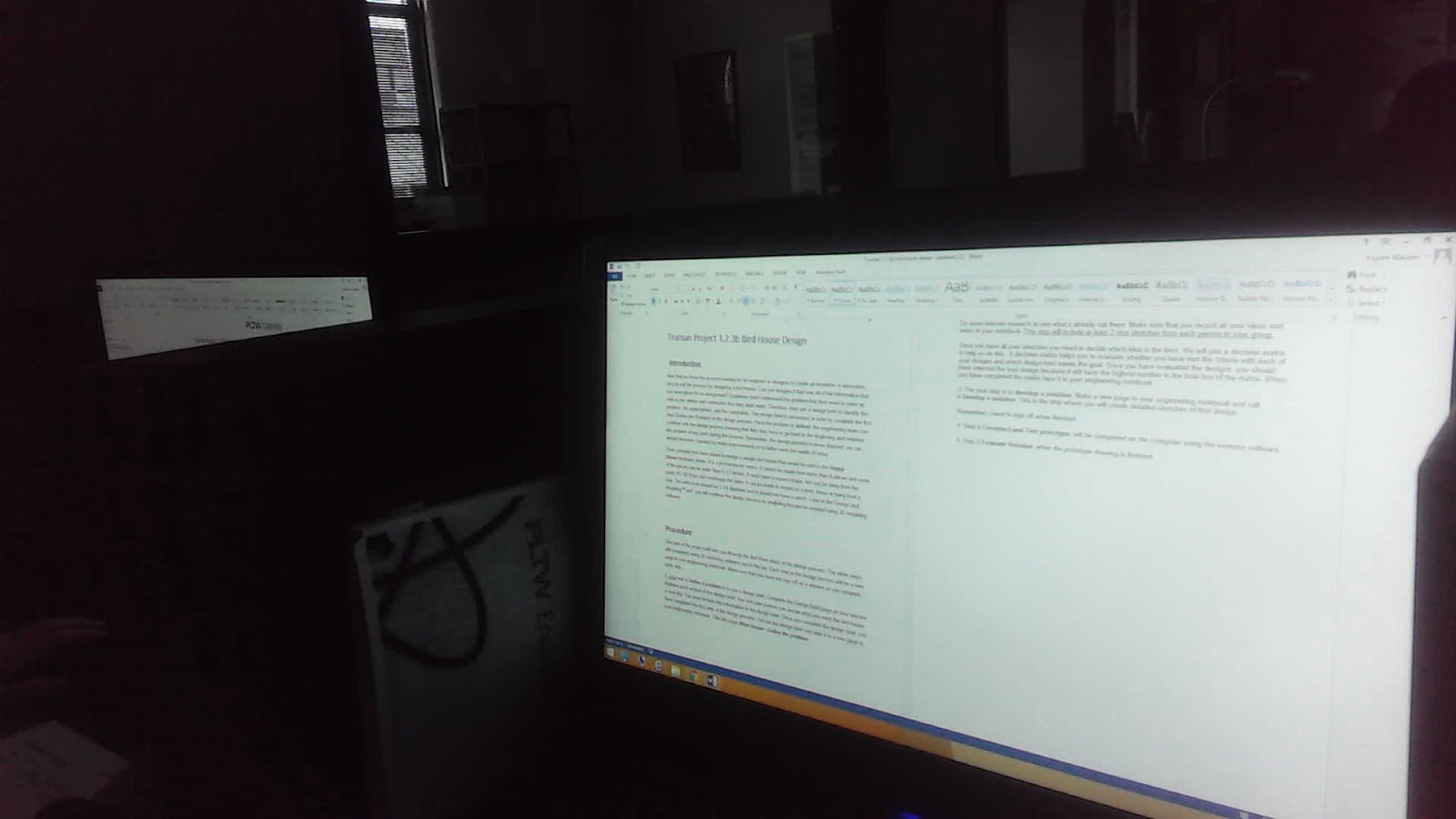
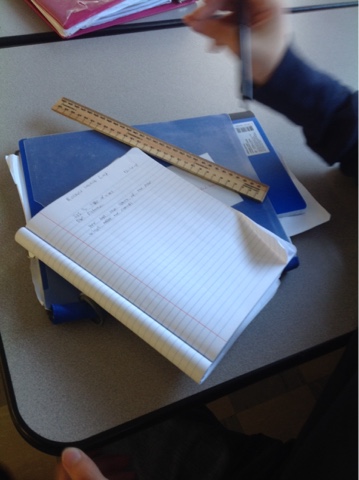
As the teacher provided the direct instruction about a new concept, students listening and reformulated the information into their own project.  This wasn't note-taking -- it was "note-applying."

The design process was presented as students outlined their own project, applying the components of their new learning.

The complexity of this task was increased as students cross-referenced their project directions with the design process.

Thursday, January 28, 2016

Student Feedback Drives Success

We know that evaluation is a high level DOK skill, so student evaluation and feedback can propel learning in your classroom.  While the feedback to students from their peers will never be the quality that you can provide, it is a valuable learning tool for both the students receiving and giving feedback.  And, it's really engaging!


During warm up, students shared their extended paragraph outlines and got feedback from their partners.  The sophistication of this dialogue demonstrated that student-led conversations are a valuable learning tool.

Both grade-level math classes lined the hall to quiz one another on slopes, intercepts, etc.  To share a variety of concepts, only one line moved as partners shifted.

Friday, January 22, 2016

Flyertime Fun

This week as I observed Flyertimes, I saw some great examples of what makes this time valuable for kids.  Whether it's a focus on relationship building, service, or leadership, Flyertime has value.  As you look at what's happening in the variety of classrooms below, it is clear that Flyertime offers students the opportunity for non-traditional learning.  As we continue to look at how we spend "Flyertime," consider what makes it good and how do we capitalize on those pieces to make it even better?

Think Win Win - it's a bracket!

Students make doggie blankets instead of blankets for the homeless when donations are limited.

This group adjusted their plan based on limited donations, demonstrating problem-solving skills.

Geocaching is an opportunity to try something new in Flyertime.

Students get online to build their perspective of the community through geocaching.

Student-created Flyertime activities; through brainstorming, students take ownership for their own class.

Appreciating those who support us, students make a collaborative thank you card for the Board of Education, and everyone has a role!

Supporting our seniors - students design the placements for the monthly Senior Associates breakfast.

Students learn about marketing as they design their service learning project.

Friday, January 15, 2016

Putting Students Before Reading

At this time of the year, throughout Truman, you can see students "owning" their reading.  In every grade level, students are participating in book clubs to discuss books; in some cases, these books are chosen by students based on a specific genre and in others, students chose from a pre-determined selection.  What's amazing about this process is the amount of student control.  Students are designing their work flow, as a group determining what to read by which date in order to discuss and share themes from the book.  The richness of this learning process is amazing for many reasons:

1)  Student Choice
2)  Student Responsibility
3)  Student Engagement
4)  Student-Centered
5)  Student-Driven

Notice the common theme of the above list:  students!  When we put students at the forefront of the reading process, they do the work, they learn, and they build skills. 


Students are reviewing their notes for their discussion.

Students collaborate on the work.

Students talk about literature.

Thursday, January 14, 2016

The Power of Technology in Rigor and Relevance

We've talked about rigor and relevance:  the ability to get kids thinking deeply beyond the classroom environment.  Check out these examples as students work at a high level of DOK on assignments that have a connection beyond the subject and the school environment.  Notice how each of these examples integrates technology - this is the power of technology, not just as bells and whistles, but as a valuable tool for increased learning!


Students in Robotics and Engineering become engineers, drafting concepts, writing code for their motors to work, and reflecting on the process.  These design skills will serve them far into the future.

Through the Rosetta Stone program, students are learning languages beyond our traditional offerings:  Italian, Japanese, and...

Making a news broadcast to showcase their knowledge of weather, students integrate technology use and collaboration skills to create a thoughtful, content-specific product.
 
Students Skype with the composer of their newest piece.  As they played for her, she provided feedback and extended their ability to emote the sound.


Stations provide a way for students to "own" their learning, practicing a new skill independently and in a broader context.  In these stations, students are conferring with their teachers and practicing the practical application of a grammar skill through author analysis and writing.

Book discussions can have many different formats to engage kids - these students communicate with each other on Edmodo to further their understanding of the book, the author's choices, and make personal connections.  By integrating technology, student comfort is increased and teacher feedback and questioning is integrated.

Wednesday, December 9, 2015

Rock Brain vs. Flexible Brain

Today in the COPE class, students were discussing the differences between rock and flexible brains in order to learn that there's not one solution to a problem, or one way to present information, or one perspective to consider.

As I popped into rooms, I saw this same philosophy in the instructional practices in our building.  When we give students ownership and choice (and we excel at that!), we teach them flexibility.

Check out how we're creating flexible (not rock!) brains...

Students collaboratively research diseases and teach others how those diseases affect their body systems. How they do that...it's their choice.

As students create towns representing economy, government, and culture in the early 1800s, they enrich their experience through 3-D representation.  This was a student choice.

In analyzing government structures, students depicted the 3 branches in numerous ways:  3-D, symbols, comparisons.  It was their choice.

Students creating tab top notes, use their own words and visuals to make meaning for themselves.  It's their choice.

Writing DBQs allows students to form an argument based on the provided information.  There's no one right answer - it's their choice.


Students creating sustainable structures design on paper before building.  What they choose to make - that's their choice.

Working on some math...it's your choice where you sit.


Students have a lot of ownership within their science notebooks, but for those students who need more structure, there is the choice to have a "chunked" experimental design sheet.

The 6th Grade Student Congress is in session, an opportunity for young senators to write and defend their bills.  They have choice in what they view as a priority.

Tuesday, December 8, 2015

Building Engagement and DOK with Audience and Purpose

Making learning authentic requires thoughtful consideration of two things:  Who's your audience? What's your purpose?

When we provide students the ability to create, applying newly acquired skills, or opportunities to figure it out for themselves, they are more likely to develop conceptual understanding that lingers long beyond their middle school years.  Knowing their purpose and audience contributes to that process as it adds accountability to their learning.

In each of the below pictures, students are fully engaged with a clear purpose for learning at a higher level of DOK.

7th graders performing "A Midsummer's Night Dream" for their families -  practicing and performing a play is a skill, but designing the set, the costumes, and organizing the production are strategic learning activities.

6th grade students Skyping a performance with students at another school - performing for one another is an essential skill.

Making fire to record observations and draw conclusions as scientists - conducting an experiment and drawing conclusions is strategic learning.

Sketching plans to become engineers - as students have choice in their design and apply their mathematical and scientific skills, they participate in an extended strategic learning opportunity.

Participating in an hour of code to learn computer programming - to design a program through integrated technology skills is a strategic process.