Showing posts with label differentiation. Show all posts

Wednesday, May 4, 2016

I was inspired by...

Today, I got the opportunity to visit elementary schools in Affton, Webster Groves, and Brentwood as we look to make instructional space decisions for Dressel.  Not only was it interesting to feel the variance in tone and culture within these 4 buildings, but it was also enlightening to see the merge of instruction and space.  I watched inspiration take place and felt inspired by what I saw.

The reality is that our classroom space is a reflection of our learning processes and vice versa.  Below are just a few examples of how student choice and authenticity are visible within classroom space.

Music Stations:  In this primary music class, gone are the whole class methods of teaching, and in their place are mini-lessons of skills with application in student choice stations.

Applying understanding of notes using instruments.
Listening to music and interpreting it through art.
Composing music through understanding of musical content.
Displaying IMG_0449.JPG
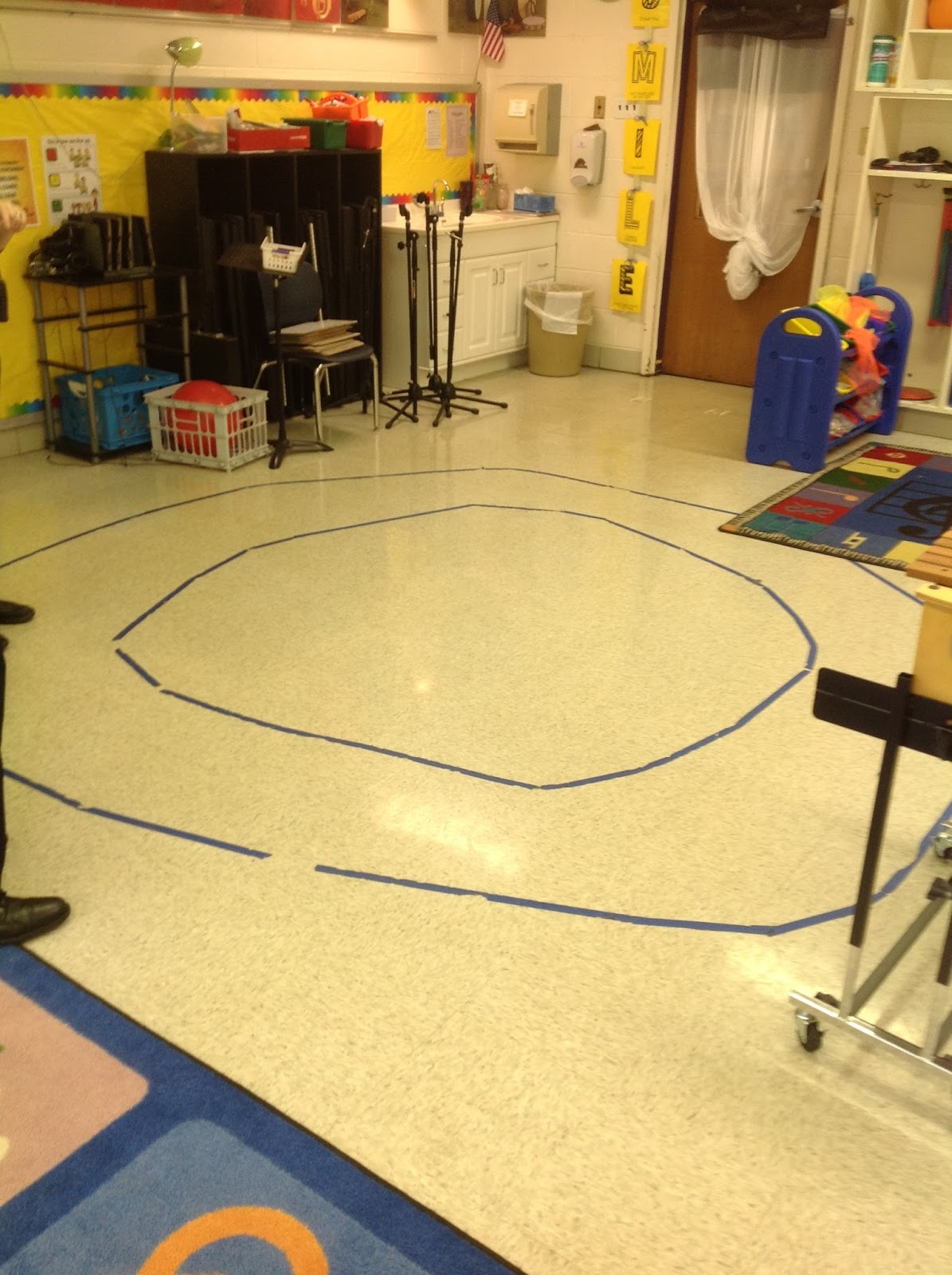
Practicing rhythm through bouncing a ball to the music within provided space.
Art Studio:  Students within this class engage in artistic behaviors, choosing their preferred medium while still mastering art concepts that traverse the content.

Displaying IMG_0449.JPG
Designing and weaving in the fiber station
Digital integration through graphic design and STEAM
Traditional experiences in the drawing studio
3-dimension design in the paper studio
Presenting, reflecting and explaining artistic behaviors to peers:  "I was inspired by Abby mixing her paints."    
Teacher questions follow student presentations: "What would you do differently next time? What did you learn from this process?"
"Traditional" Classrooms:  In these classrooms, instructional space moves beyond individually defined student desks and into task purpose and student comfort.

Modular furniture allows students to collaborate with peers or work individually in comfort.

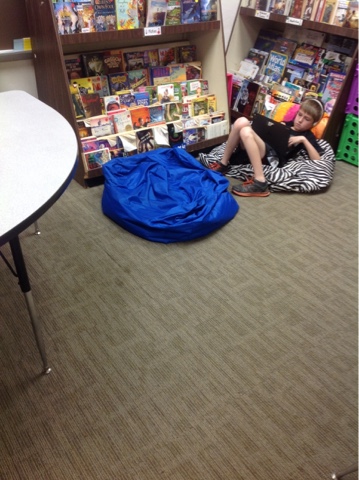
Some students choose to sit on pillows on the floor

Some students prefer to lounge and work

Counter height seating provides a standing work station
As we look to the future and innovation within classroom design, the reality is that different people need different settings.  teachers need to feel comfortable with the instructional environment - if varied seating arrangements and student-choice stresses out the teacher, it's not good for kids.  Students need to feel comfortable - some students need structure and others prefer more freedom.  The best schools have a mix of these environments so that individual needs are met as well as stretched.

Here's a great link to a short article that can get you thinking about your own comfort with innovation:  http://georgecouros.ca/blog/archives/6277.
Thursday, April 21, 2016

Reading, Rapping, and Mapping

You might think that I'm referring to MAP testing, but nope!  I'm talking about geography skills and all the other great learning that is happening in 6th grade this week.  Check it out!


Students present their learning to the class in science, designing a Kahoot to engage their peers.
How low can you go?  Students meet in a small group to ensure mastery of the lowest common denominator. 
Students are differentiated into math groups to work at their level.  In this case, students practice the concept with manipulatives.
As groups work together, the teacher leads one to ensure mastery of the concept.
As students read, they continue to annotate, making note of important sections of the book.
As students give presentations in science, students are held accountable for learning the material presented.
Those science presentations again....
What a great idea!  As students write, they are given a template to organize their thinking. This template easily wipes clean for the next student to use.
Students collaborate to summarize main ideas and other learning objectives in visual form.
Students lead learning in a small group.
The roll of the dice determines what students learn - this is a fun way to "gamify" learning.
Stations:  Students plan a game to demonstrate their knowledge of the US.
Stations:  Students are RAPping.
Stations:  More mapping.

Monday, November 30, 2015

Differentiating Differentiation (Say That 5 Times Fast)

Like holiday cookie recipes, there's not just one recipe for differentiation.  Differentiation of student learning can take many forms, from the simplest to the most complex.

The simplest form:  Student Choice.
Students work collaboratively, choosing how to depict the digestive system for a presentation to class.

Students design a movie trailer for their realistic fiction writing - all based on their creative choice.
Students choose how to visually represent the complexity of government systems.
Increasing complexity:  Student skill groupings.

Students create an interdisciplinary math book while classmates overcome a misconception.

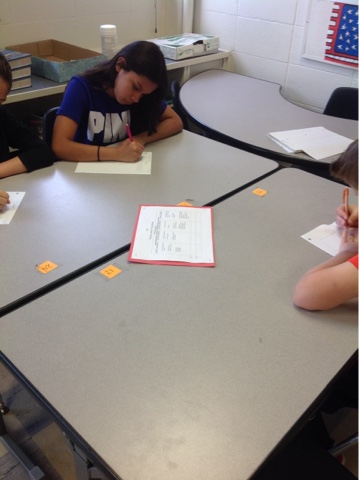
Students work collaboratively to discuss the properties they didn't master previously.

Working with a small group of students to ensure their content mastery and reteach skills.

Independent study and work completion for the class as the teacher meets with a small group of students.

The structures in your classroom set the tone for differentiation.  Consider how your classroom environment contributes to small group instruction or individual conferencing.  Consider how well you know your students, both their skills and their interests.


Assessing students to provide differentiated learning opportunities.

Setting up the classroom so there's clear access to differentiate.


Monday, October 12, 2015

A "Walk" in the Woods

I often jest about how I leave you to be "in the woods" for the Outdoor Leadership Experience (OLE), but in all honesty, it's a very productive time for me, and I believe it makes me a better leader.  In education we spend too little time thinking, planning, and reflecting.  Often, we learn something, are expected to implement it, and then move on to the next thing.  And, I realize that I can be guilty of furthering this problem.  OLE reminds me to slow down, think, process, and plan with intention.

To better understand this experience, note that I helped lead the Turtle group, a group of 10 teachers, directors, principals, and assistant principals.  During the 3 days, the Turtle group worked on developing a community, completing initiatives together, and learning from one another.  The Turtles were 1 of 8 groups who functioned in this way.


On Wednesday night, OLE participants created hand-made journals for their secret partner.  Each person was responsible for writing about their partner's experience, documenting their teamwork, growth, and support of the group as a whole.
The first night, the group worked together on an initiative called 3 Circles of Communication.  Before journeying on their orienteering adventure, it was important to build systems of communication and create a community among the group.
On Thursday morning, we continued working on our listening and communicating skills with the Minefield.
Before the group could venture "into the woods" they needed to build their skills in compass reading and their understanding of topographical maps.
"Turtle Power!" As the group began their hike to find 11 flags (plus a bonus) throughout the Mark Twain National Forest with only a compass and topographical map, they came together as a team to celebrate their successes.

We left camp at noon and officially finished our task at 2 a.m.   We carried our lunch with us (finally eating around 3 p.m.) and cooked some spaghetti tofu for dinner at 10:30 p.m.  Learning to communicate and make decisions as a large group in both the light of day and the dark of night has many parallels to the decision-making processes in our schools.
The Turtles worked together to complete the Marble Maze, first moving 1 marble to the exit without falling through any holes, and then doing the work with more complexity:  2 marbles, then 3.  It concluded with all but one person blindfolded to complete the task.  
Failing Forward:  In the Island initiative the group found themselves unsuccessful.  However, the group learned a lot from their failure, admitting that they weren't listening to the group members who had suggestions different from their identified plan.
In addition to group challenges, there were individual ones:  rappelling and rock climbing.


In addition to all of this fun work, we had a relaxing experience finding flags at various points along the lake.   We tied our canoes together and worked as a group to achieve our goal.  Along the way, we appreciated the majesty of a bald eagle soaring alongside us.